ServicesTree Trimming and Removal
Tree Trimming and Removal in Oakland
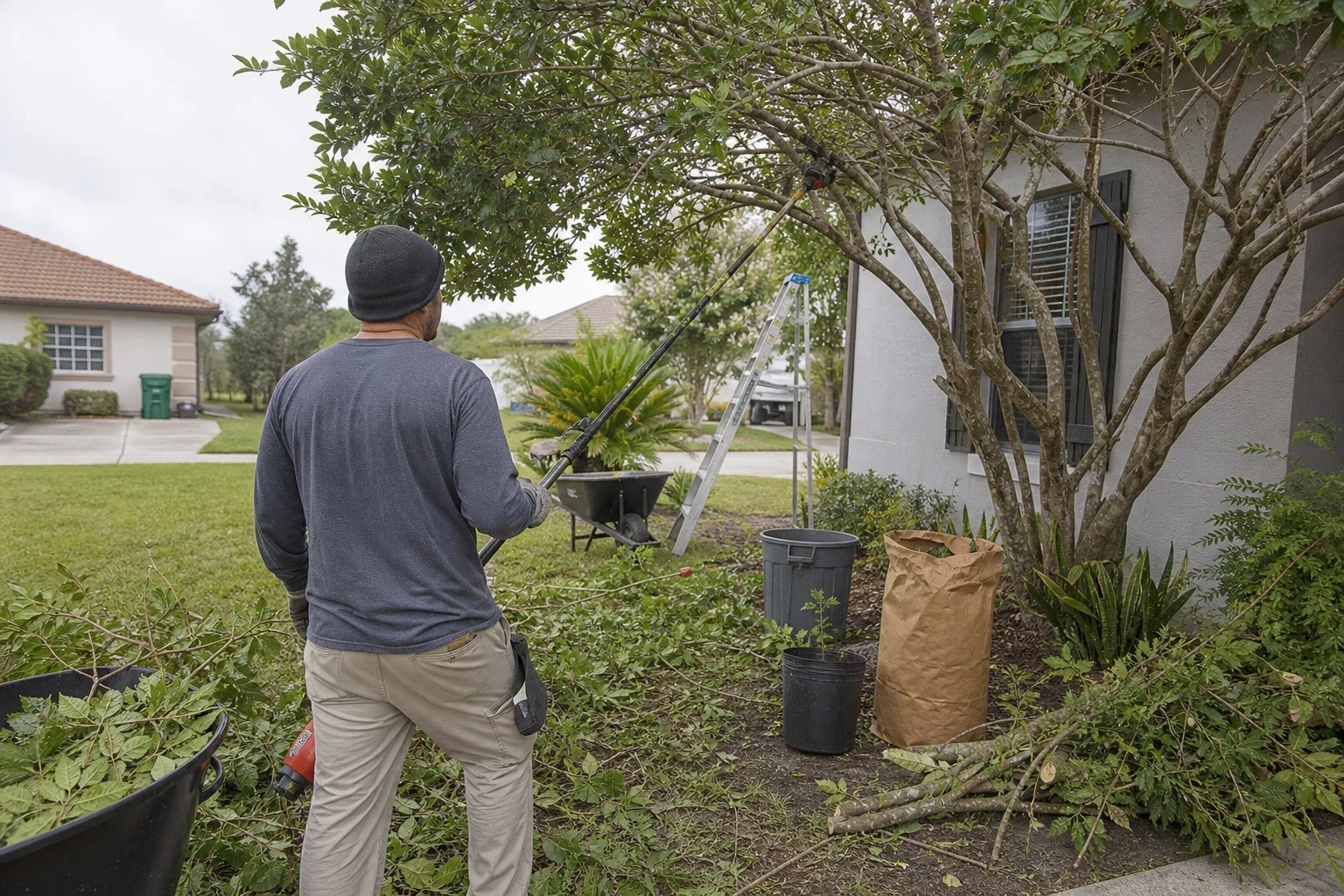
We look at the tree before we talk about cutting it. You get a plain read on its health, what needs to go and what can stay. Then we trim it right or take it down cleanly and haul the wood away.
Trim it, save it or take it down
Most trees don't need to come down. A lot of them need deadwood cut out, a heavy limb shortened or the canopy thinned so wind passes through. We start every job by walking the tree with you and telling you what we see: cracks, decay, weak branch unions, roots lifting soil.
Some trees are past saving. Laurel oaks often rot from the inside by middle age, and a hollow trunk can look fine from the yard. When removal is the right call, we say so and explain why. When it isn't, we tell you that too.
Good trimming before hurricane season, which runs June through November, cuts down on limbs coming through a roof or across the driveway. It also lets more light reach your lawn and beds.
What the work includes
Tree inspection
We check the trunk, the main limbs and the root flare. You hear what we found in plain words before any recommendation.
Deadwood and hazard limbs
Dead, broken and hanging branches come out first. These are the ones most likely to drop in a summer storm.
Thinning and raising
We thin dense canopies so wind can pass through and raise low limbs off the roof, walkway and driveway. Cuts are made at the branch collar so the tree can seal over.
Taking a tree down
If removal is the answer and space is tight, we work from the top down in small pieces. Heavy sections are rigged and lowered on rope, so nothing slams into your yard or your home.
Cleanup and haul-off
Branches get chipped, wood gets hauled and the yard gets raked and blown. If you want the stump gone, our stump grinding service handles it.
Signs a tree needs attention
- Dead branches in the canopy
- Bare limbs during the growing season are dead wood. They get brittle and fall without warning.
- Mushrooms or soft spots at the base
- Fungus at the trunk or roots usually means decay underneath. It's worth having someone look before the next storm.
- Limbs over the roof
- Branches resting on or hanging over the roof scrape shingles, drop leaves into valleys and give pests a path in.
- Cracks, splits or a new lean
- A tree that leans more than it used to, or a crack where two big trunks meet, can point to a failing root system or weak union.
- Heavy moss and thin leaves
- Spanish moss doesn't kill a tree by itself, but a thin, struggling canopy under all that moss often means the tree is in decline.
How a tree job runs
- 1
Walkthrough and estimate
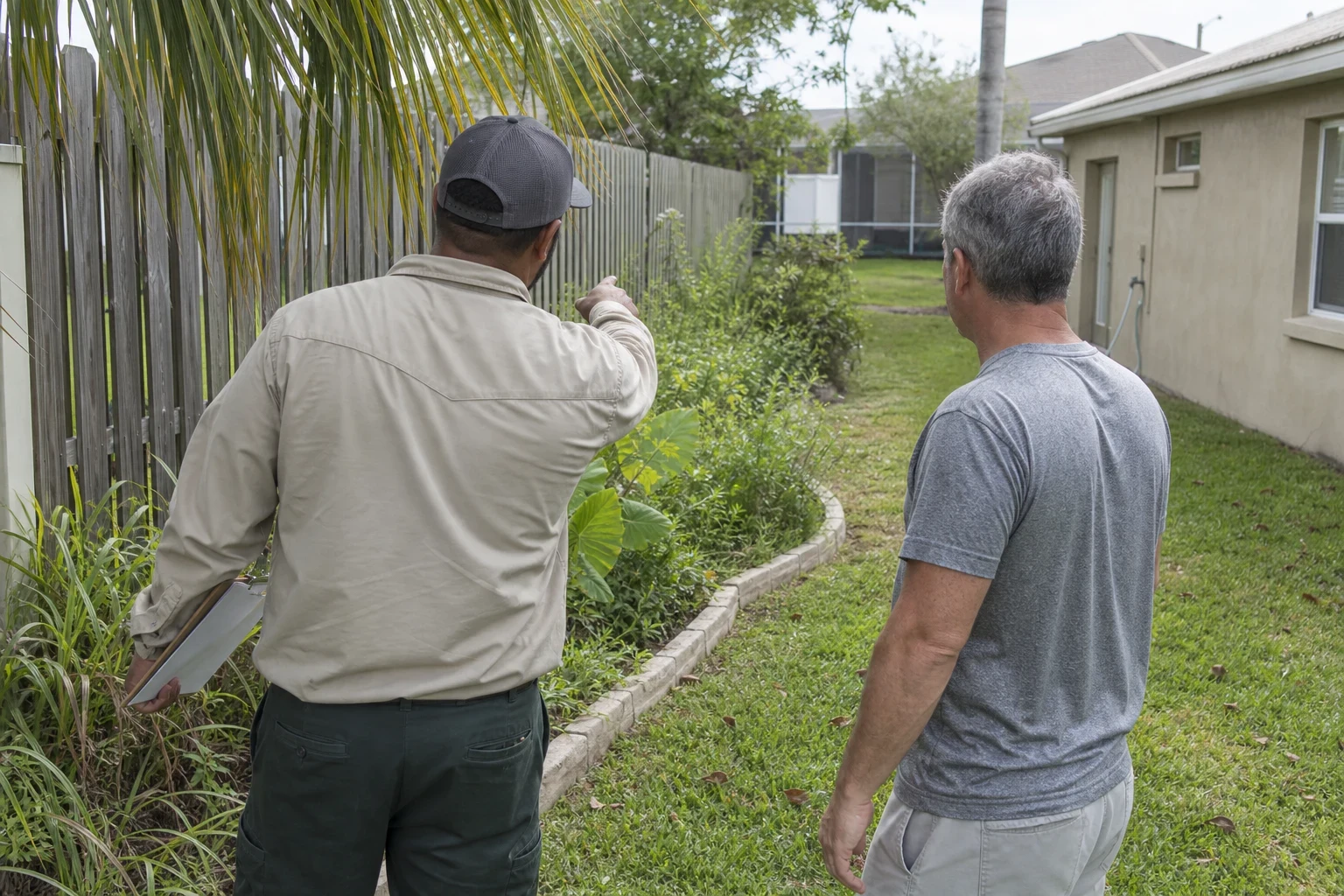
We come out and go tree by tree with you, showing you the problems we spot. Then you get a free estimate with each tree's work written out on its own line.
- 2
Permit check
Some towns in the area want a permit before certain trees come out. We look up what applies to your address before a removal goes on the calendar.
- 3
Work day
We set up, protect the lawn and beds where equipment rolls, and keep the work area roped off. Trimming is done from the ground, a ladder or a climbing line depending on the tree.
- 4
Cleanup and last look
We chip, haul and clean up. Before we leave, we stand under the trees with you, point out where each cut was made and answer anything you want to know.
What moves the price
For bigger jobs, financing is available: up to $100,000 on 2–12-year terms, no prepayment penalties. Every tree is priced after we see it, because two trees of the same height can take very different amounts of time. These are the things that make the biggest difference.
- Height and canopy width
- Taller trees with wide canopies take more cuts, more time and more hauling.
- Access and what's underneath
- A tree over the house, a pool screen, a fence or power lines has to come down piece by piece. An open backyard tree goes faster.
- Tree condition
- Decayed or dead wood is unpredictable and has to be handled carefully, which adds time.
- Haul-off and stump
- Hauling all wood is standard. Leaving firewood or grinding the stump changes the total.
Tree trimming and removal questions
- What time of year should my shade trees be pruned?
- For most oaks and other shade trees, the cooler months into early spring are a good window, before the big push of summer growth. We also like to clear hazard limbs ahead of hurricane season in June. Anything dead or broken can come off whenever you notice it.
- Do you top trees to make them shorter?
- No. Topping leaves big stubs that rot and sends up weak sprouts that break easily in wind. If a tree is too tall for the spot, we'll talk about reduction cuts or whether removal makes more sense.
- Will the town have to sign off before a tree comes out?
- It can. The rules change from town to town and also depend on the species and how big the trunk is. We look up what applies to your property ahead of time, so nothing catches you off guard on removal day.
- Do you handle palm trees too?
- Yes, but palms are trimmed differently than hardwoods. Our palm tree pruning and removal service covers fronds, seed pods and full palm takedowns.
- Will my lawn be torn up afterward?
- We lay down boards or mats where heavy equipment rolls and lower big pieces with rope instead of dropping them. You may see some flattened grass for a few days, but no ruts or piles left behind.
Have someone look at your trees
We'll walk your yard, tell you what each tree needs and what it doesn't. You get a clear plan and a free estimate before any cutting starts.