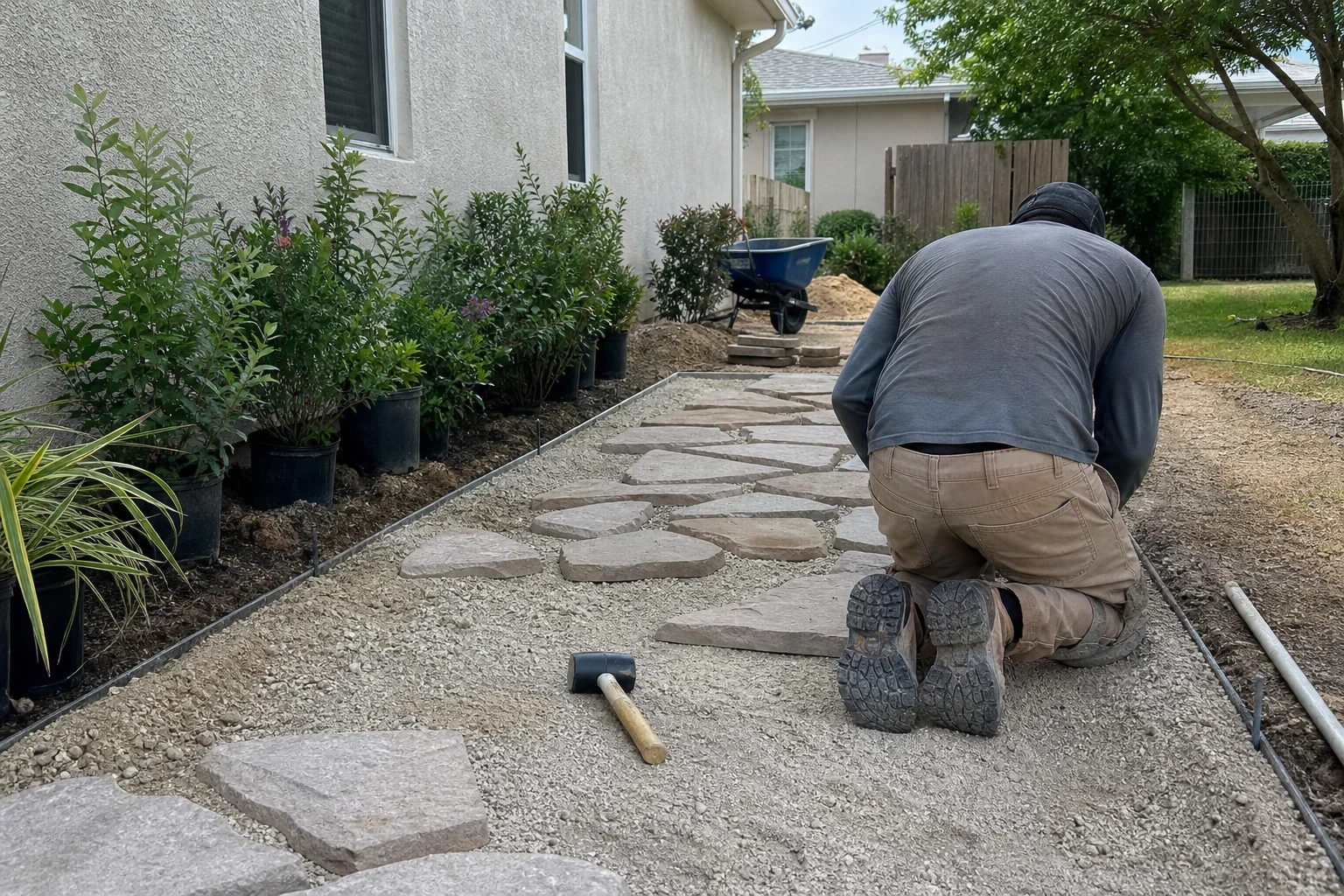
ServicesHardscape Installation
Hardscape Installation in Oakland, FL
We build paver patios, walkways, fire pit areas and low walls that stay flat and drain right. Before we draw anything, we walk your yard, check the soil and grade, and tell you plainly what will hold up and what won't.
Stone and Pavers That Stay Where We Put Them
Hardscape is the hard stuff in your yard: patios, paths, steps, edging, seat walls and fire pit pads. Most problems with it start underground. A patio sinks because the base was thin. A walkway turns into a pond because nobody set the slope. Pavers heave because a tree root was left under them.
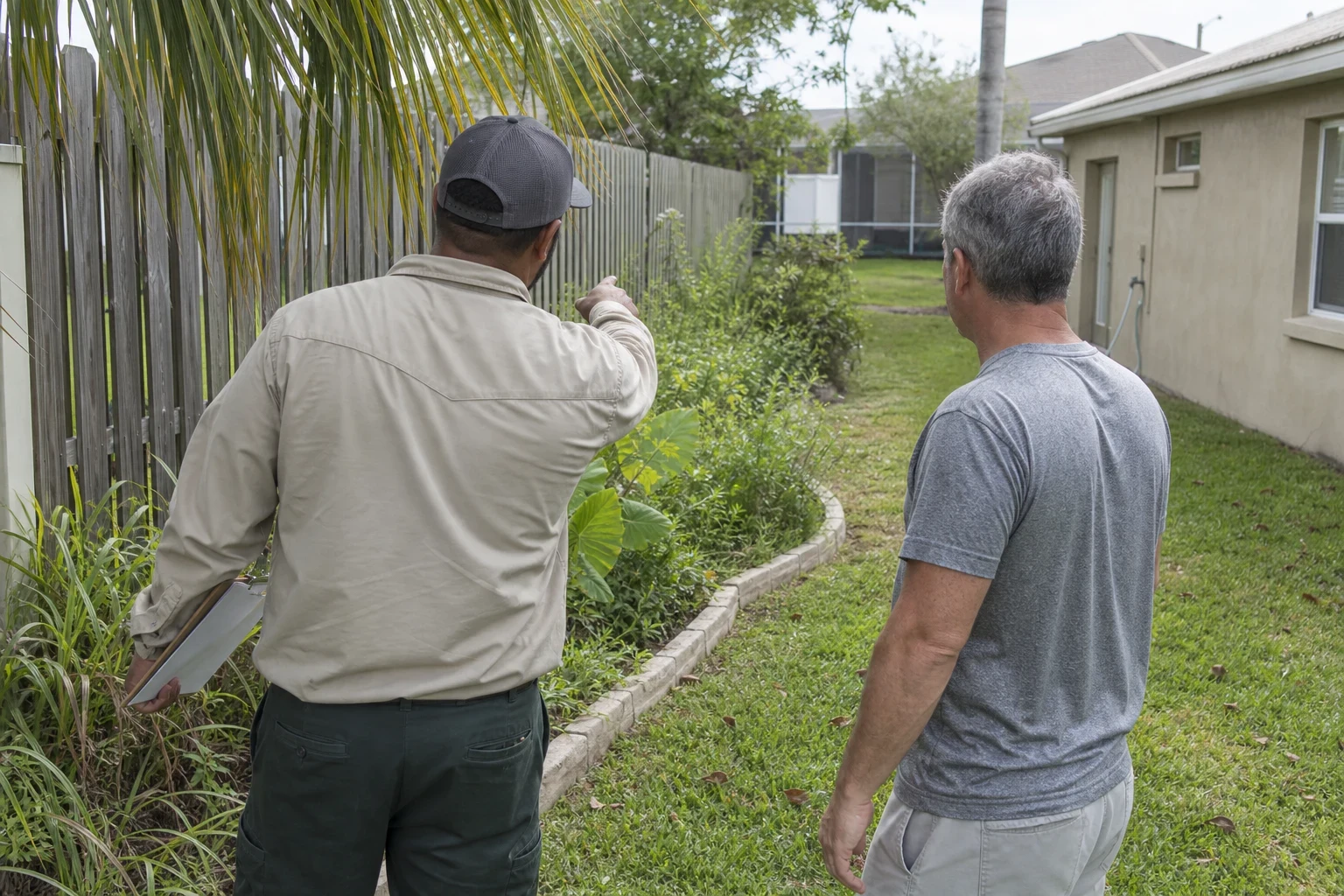
So we look first. We dig a test hole, check how water moves across the yard after a storm, and note any roots or utilities in the way. Then you get a plain report of what we found and a layout that fits it. Sandy soil around here drains fast but shifts easily, so a well-compacted base matters more than the paver you pick.
If you want planting around the new patio, our landscape design work and sod installation can be planned at the same time, so the grades meet cleanly.
What a Hardscape Job Includes
- 01
Site check and layout
We mark the footprint with paint or stakes so you can stand on it and see the size before anything is dug. We also call in a utility locate.
- 02
Excavation and base
We dig out to the right depth, lay crushed stone in layers and compact each one. This is the part you never see and the part that decides how long the job lasts.
- 03
Slope and drainage
Every patio gets a gentle pitch away from your home. Where water collects, we can add a drain or a gravel channel.
- 04
Pavers, edging and joint sand
We set the pavers, cut the edges clean, lock them in with edge restraint and sweep in polymeric sand to keep joints tight and weeds down.
- 05
Low walls and fire pit areas
Seat walls, raised planters and fire pit pads are built on the same compacted base, with block that suits the rest of the job.
- 06
Cleanup
We haul off the dug soil and leftover material, rinse the surface and leave the lawn edges tidy.
Questions about Hardscape Installation?
Call(407) 792-5732Signs Your Yard Needs New Hardscape
Pavers sinking or rocking
When stones dip or wobble underfoot, the gravel under them has usually shifted, or it was packed too loosely from the start. Lifting them and building a fresh base tends to last longer than filling the low spot.
Water standing after rain
If puddles sit on your patio or run toward your home, the slope is wrong. Our heavy summer storms make this show up fast.
Worn dirt paths
A bare track across the grass tells you where people actually walk. That is a good place for a path.
Cracked old concrete
Slabs crack and lift over time, especially near trees. Pavers over a fresh base can replace them and flex instead of split.
No usable outdoor space
If the only place to put a chair is on the grass, a small patio can change how you use the yard.
How the Work Goes
- 1
Walkthrough and findings
We come out, look at the soil, slope, roots and sun, and talk about how you want to use the space. You hear what we found before you hear any price.
- 2
Written estimate and layout
You get a line-by-line estimate and a simple drawing. If your HOA needs to approve the plan or a permit is required, we tell you up front and help with the paperwork.
- 3
Dig and base day
We protect the lawn where equipment rolls, dig out and build the base. Most small patios are dug and based in a day or two.
- 4
Laying and finishing
Pavers go down, edges get cut and locked, joints get sanded and the surface is compacted again. We walk it with you before we pack up.
What Sets the Price
We price every hardscape job from what the walkthrough turns up. A patio over clean, level sand with an open side gate is a lighter job than the same size patio over an old slab behind a narrow fence. Each item goes on the estimate as its own line, so nothing is hidden in a lump sum. For bigger projects, you can spread the cost out: we offer financing up to $100,000, with terms from 2 to 12 years and no prepayment penalties.
- Size and shape
- More square feet means more base and pavers. Curves and lots of corners add cutting time.
- Materials
- Concrete pavers, travertine and natural stone vary a lot in cost and in how they handle heat underfoot.
- Soil and old surfaces
- Tearing out an old slab, removing roots or bringing in fill to level a low yard adds labor and hauling.
- Access
- If a skid steer can't reach the backyard, more of the work is done by hand and wheelbarrow.
- Walls, steps and drains
- Seat walls, steps and drainage add materials and time beyond a flat patio.
Hardscape Questions We Get
Pavers or poured concrete for a patio?
We usually suggest pavers. They flex a little when the ground moves instead of cracking, and one stone can be lifted and reset if a root pushes up. Concrete costs less on some jobs, and we will say so if that is true for yours.
How long until we can use the patio?
You can walk on a paver patio as soon as we finish. Polymeric sand needs a dry day or so to set, so we will tell you when it is safe to hose it off or set heavy furniture down.
Will the pavers get weeds or ants in the joints?
Polymeric sand cuts down on both a lot, but nothing stops them for good. Topping off joint sand every few years keeps the surface tight.
Do I need a permit or HOA approval?
A simple patio often doesn't need a permit, but some walls and larger projects do. Many HOA communities, including some in Winter Garden and Horizon West, want to sign off on the plan first. We check during the estimate and handle the permit when one is needed.
Can you build around my big tree?
Yes, but we keep the base away from the main roots so the tree stays healthy and the pavers stay level. Sometimes that means a different shape or a gap with mulch. We'll show you the options on site.
Let's Look at Your Yard First
We'll come out, check the ground and tell you what will last. Then you decide.