ServicesLawn Care
Lawn Care in Oakland
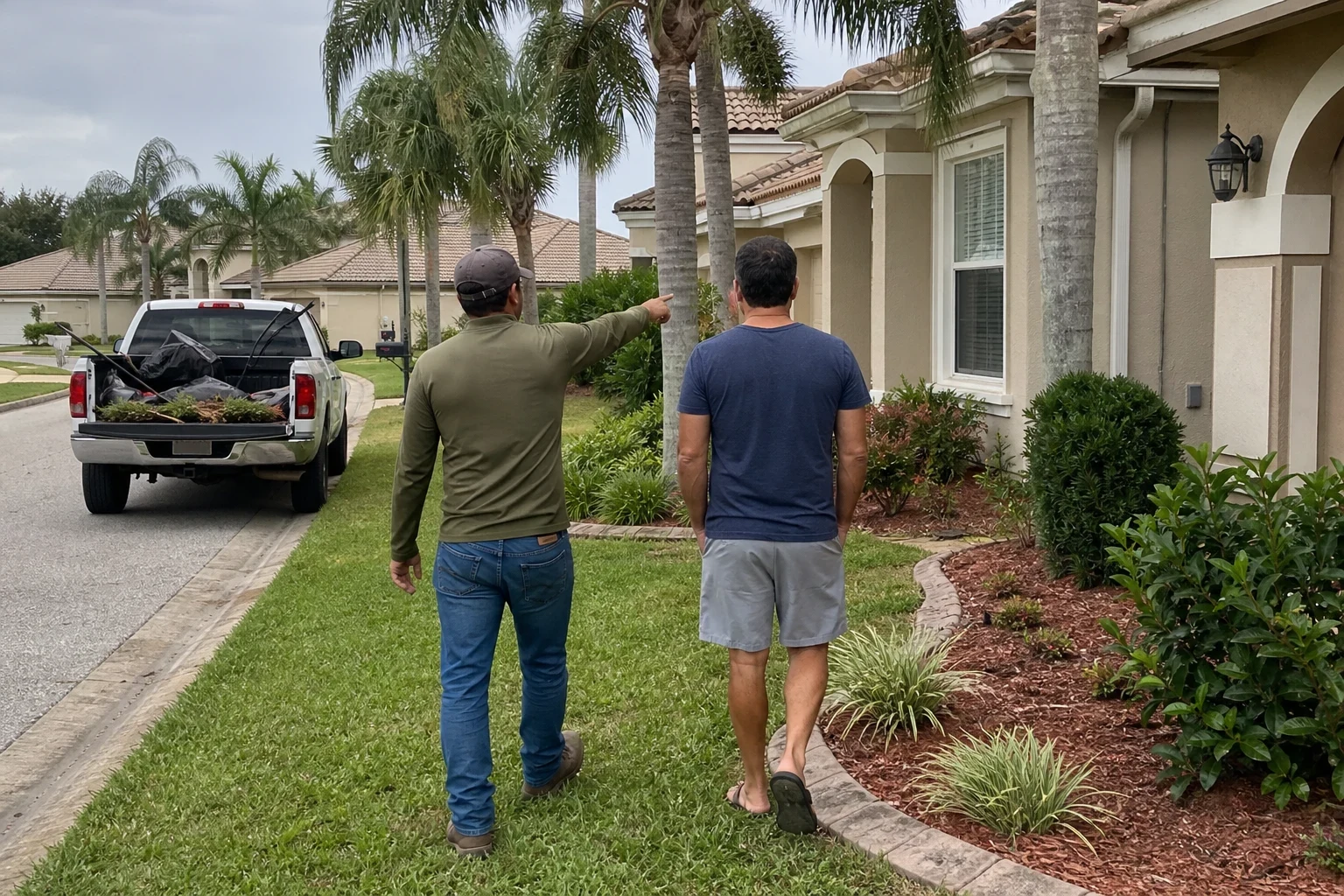
We walk your lawn before we quote it. We check the grass type, the soil, the weeds and any bug or fungus damage, then tell you plainly what it needs. After that, we mow, edge and feed it on a steady schedule.
What Our Lawn Care Covers
Lawn care is the regular work that keeps grass thick and even: mowing at the right height, clean edges, feeding at the right times and keeping weeds and pests in check. Done steadily, it costs less than fixing a lawn that has gone thin.
Most yards around here are St. Augustine, with some Bahia and Zoysia. Each one wants a different mowing height and reacts differently to heat, shade and sandy soil. So we start by looking. We tell you what we see, what is worth fixing and what can wait.
If the lawn is too far gone, we will say so. Sometimes new sod makes more sense than another season of treatments, and we would rather tell you that up front.
What You Get With Each Visit
Mowing at the right height
St. Augustine likes to stay taller, around 3.5 to 4 inches. Cutting it short stresses the roots and lets weeds in. We set the mower for your grass, not for the last yard we cut.
Edging and trimming
We run the edger along the driveway, sidewalk and bed lines. Then we string-trim around mailbox posts, fence lines and tree trunks. Before we pack up, the driveway and walks get blown clean of grass.
Feeding on a schedule
Fertilizer goes down in the seasons when the grass can use it. County rules limit nitrogen during the summer rainy months, and we follow them.
Weed control
We spot-treat weeds like dollarweed and crabgrass instead of blanket spraying the whole yard. Fewer chemicals, and the grass does not get burned.
Bug and fungus checks
We look for chinch bug damage along hot edges and brown patch in damp spots. If we find it, we show you and explain the fix before treating.
Notes after each visit
If we notice a broken sprinkler head, a dry zone or a tree shading out the grass, we tell you. You decide what to do about it.
When Your Grass Is Asking for Help
- Yellowing strips near pavement
- In hot, dry stretches, grass along the driveway or sidewalk that turns yellow and then tan is a common chinch bug sign. Left alone, the damage moves outward quickly.
- Brown rings in the grass
- Circular brown areas, often after cooler wet weather, point to fungus. It needs the right treatment and often a change in watering.
- Weeds taking over
- Dollarweed, sedge or crabgrass spreading faster than the grass usually means the turf is thin or the yard is getting too much water.
- Thin grass under trees
- Shade weakens most turf. Mowing height and feeding need to change, or the area may need a different plant altogether.
- Scalped or uneven spots
- Bare tan patches after mowing mean the blade is too low or the ground is uneven. Both are fixable.
How We Handle Your Lawn
- 1
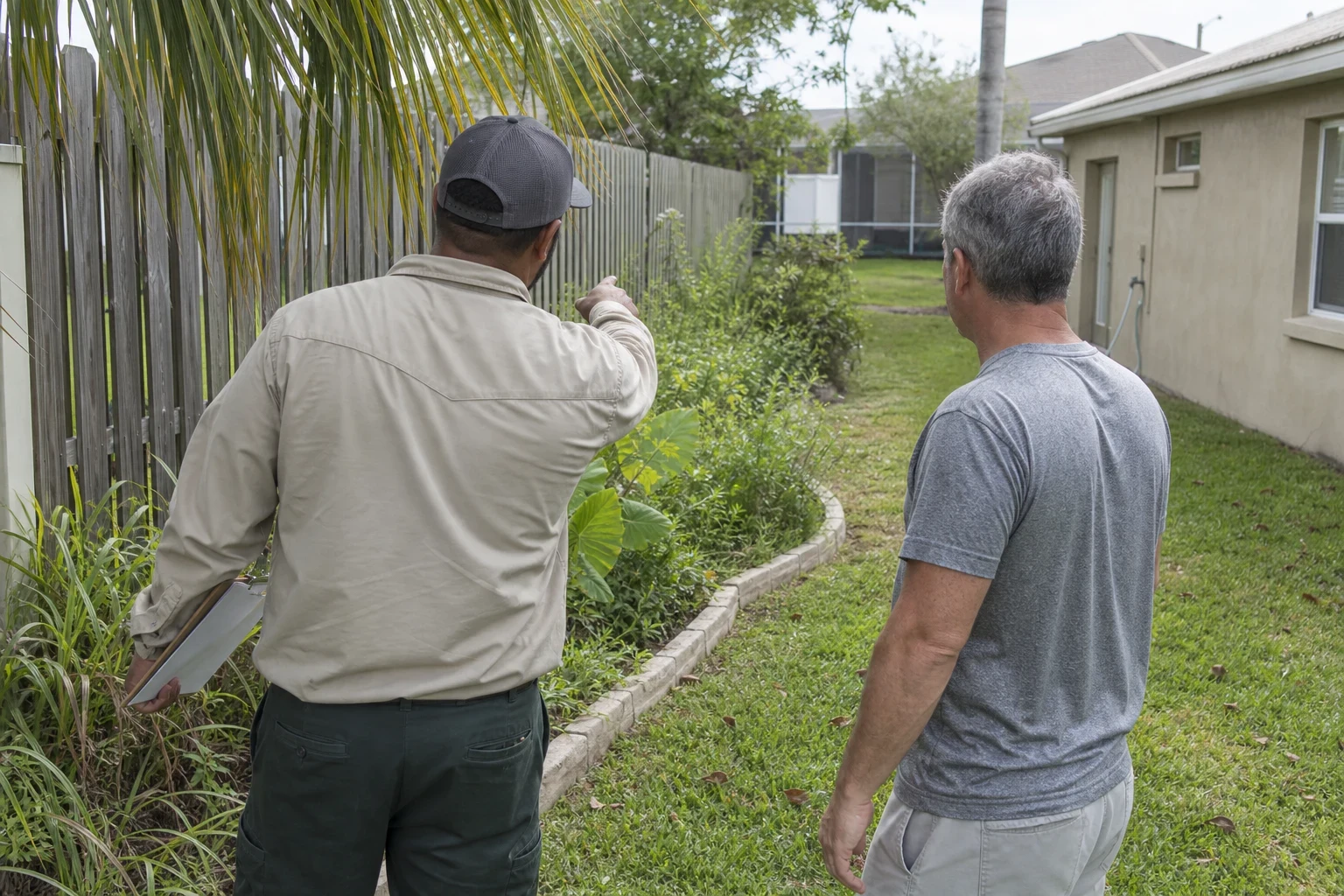
We walk the yard with you
We look at the grass type, the soil, the weeds and any damage. We pull back the grass where something looks off. You see what we see.
- 2
We tell you what we found
You get a plain rundown: what is healthy, what needs work and what can wait. Then a free estimate for regular care, with nothing added you did not agree to.
- 3
We set a schedule
Mowing is usually weekly in the growing season and less often in the cooler months. Feeding and weed control follow the calendar for your grass.
- 4
We show up and do the work
Each visit we mow, edge, trim and clean up. Gates get closed behind us, and nothing is left on your hard surfaces.
- 5
We keep you posted
If something changes, like a new dry spot or bug damage, we tell you before it gets worse.
What Sets the Price
Lawn care is priced by the yard, not by a flat rate that ignores what is there. We give you the number after we walk the property, so it reflects your lawn. You know what each visit includes before we start. When lawn work is part of a larger project at your home, we offer financing up to $100,000 on 2–12-year terms, and paying it off ahead of schedule carries no prepayment penalties.
- Lawn size
- More square feet means more time mowing and edging. Corner lots and long frontages add trim work.
- Access and obstacles
- Narrow side gates, slopes, lots of beds and trees to trim around all slow the work down.
- Condition of the lawn
- A lawn with heavy weeds or active bug or fungus damage needs more treatment at first. Once it is under control, the cost usually settles.
- What you want included
- Some people want mowing and edging only. Others want feeding, weed control and pest checks too. You choose.
- Visit frequency
- Weekly visits in summer cost more over a month than every other week in winter. We set the schedule to what the grass needs.
Lawn Care Questions
- How many times a month will you mow?
- Grass here grows hardest from spring into fall, so most yards need a cut once a week in that stretch. When the weather turns cool, the lawn slows down and a visit every two weeks usually keeps it neat. We watch how fast your grass is actually growing and adjust, instead of sticking to a set calendar.
- Do you bag the clippings?
- Usually no. Short clippings left on the lawn break down and feed the soil. If the grass got too tall or there is fungus, we bag that cut.
- Can you fix my brown patches?
- First we figure out what caused them. Chinch bugs, fungus, a dry sprinkler zone and dog spots all look similar but need different fixes. We show you what we find before we treat anything.
- Will you fertilize in the summer?
- County rules limit nitrogen and phosphorus fertilizer in the summer rainy season, so we work around that. We feed in spring and fall and use allowed products in summer when the lawn needs help.
- What if my lawn is beyond saving?
- We will tell you straight. If more than about half the lawn is weeds or bare, new sod is often cheaper in the long run. We can talk through sod installation as part of the same estimate.
Start With a Walk Around Your Yard
We come out, look over the grass and soil, explain what we find and then price regular care. You are under no obligation to sign up.