ServicesIrrigation
Irrigation Repair and Installation in Oakland
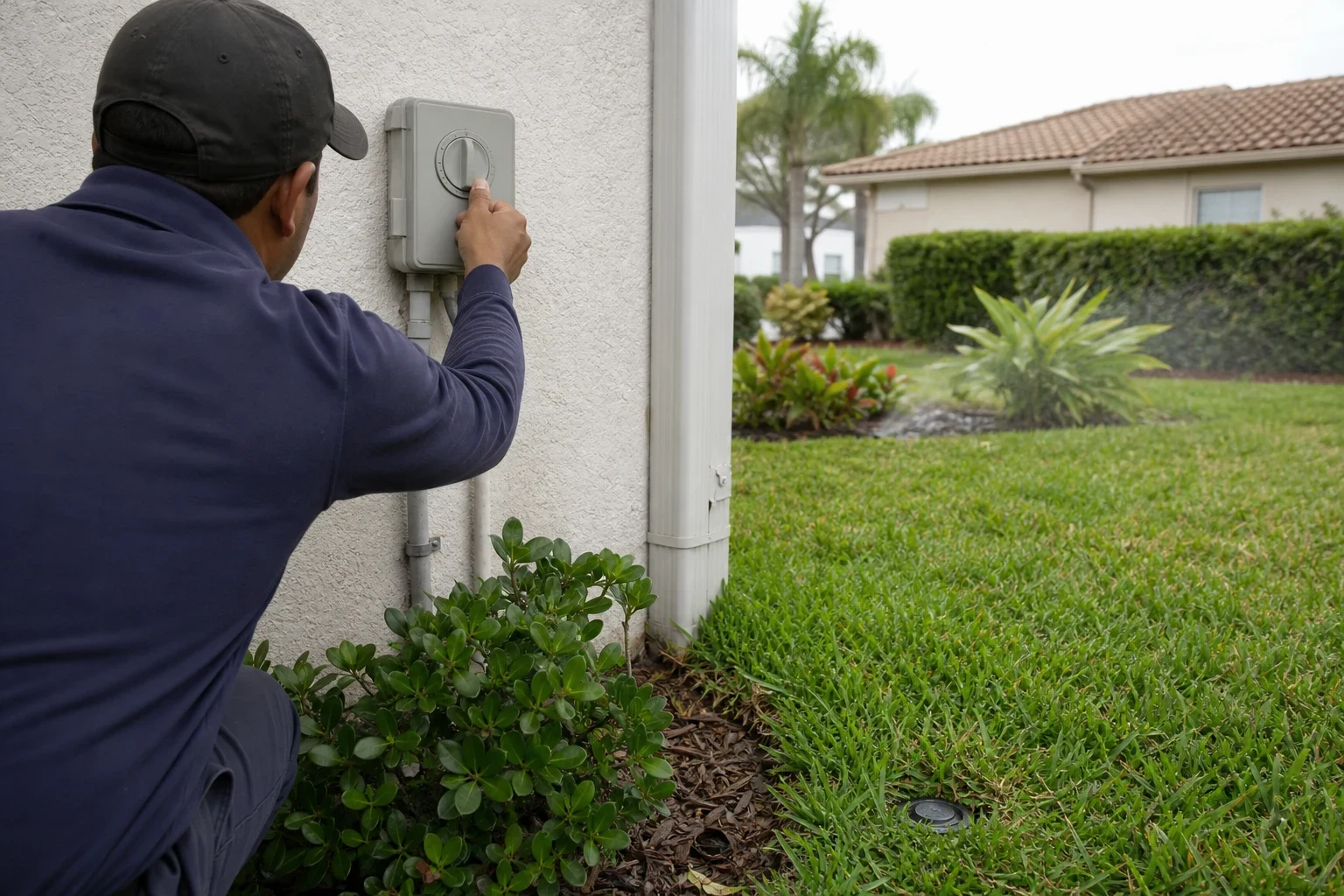
Dry patches, soggy corners and a water bill that keeps climbing usually trace back to a few heads, a valve or a timer. We run every zone, mark what we find and explain it plainly. Then you decide what gets fixed.
What We Do With Your Sprinkler System
We repair, adjust and add on to in-ground sprinkler systems at your home. That covers spray heads, rotors, drip lines in beds, valves, pipe and the controller on the garage wall. Most systems we see are not worn out. They have a few broken parts and a schedule nobody has touched in years.
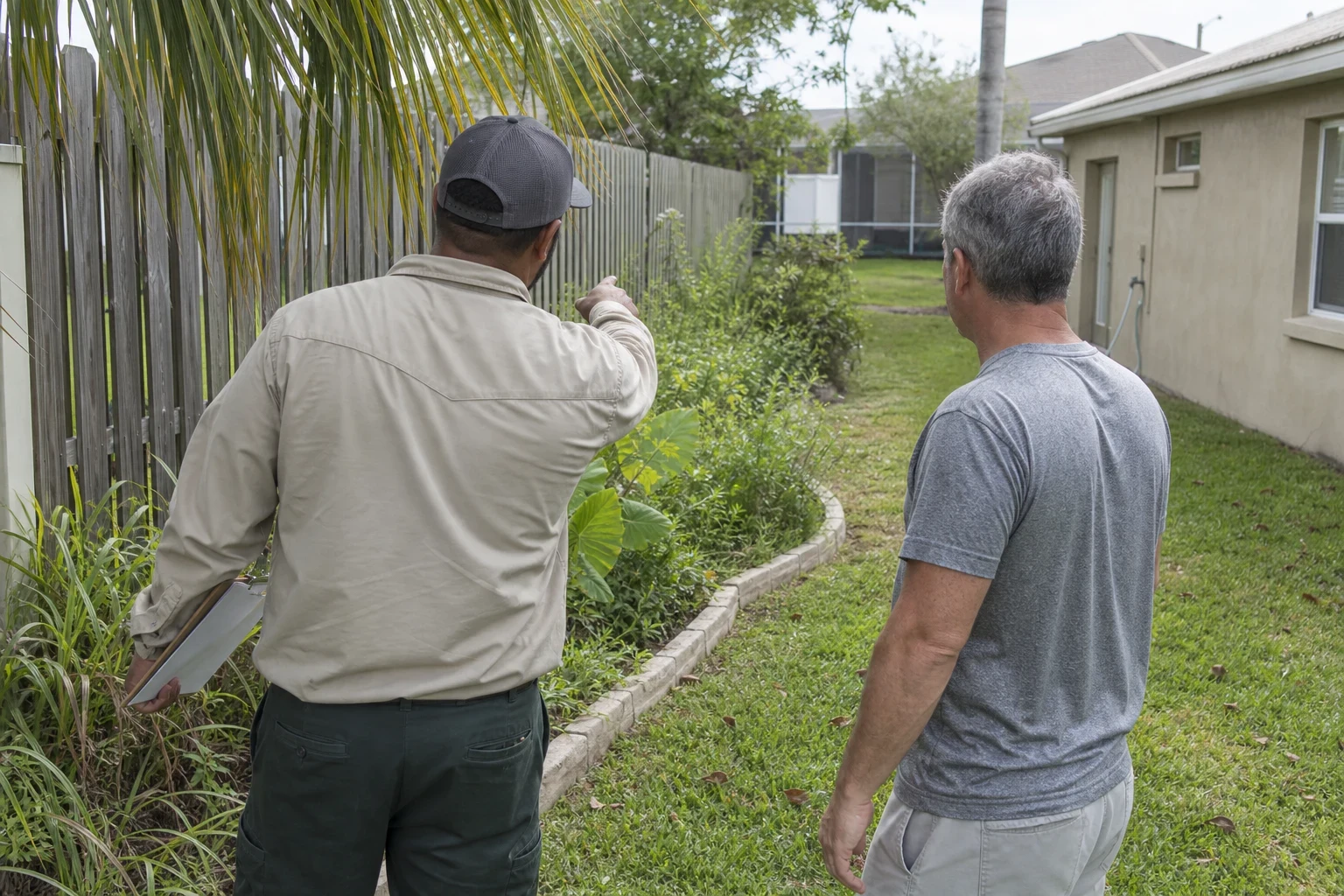
Our first step is always a full test. We turn on each zone, walk it and note heads that are tilted, buried, clogged or spraying the driveway. You get a plain list of what is wrong and what it takes to fix. If a part can be cleaned or reset instead of replaced, we say so.
Sandy Central Florida soil drains fast, so water that lands in the wrong place is simply lost. Getting coverage right means greener grass with less water.
What the Work Includes
Zone-by-zone test
We run every zone and check spray pattern, pressure and coverage. Problems get flagged so we can show you on the walk.
Head and nozzle repair
We replace broken or mower-damaged heads, raise sunken ones to grade and swap clogged nozzles. Matched nozzles keep one zone from flooding while another stays dry.
Valve and leak repair
Stuck valves, weeping fittings and cracked pipe get dug up and fixed. We backfill and set the turf back when we are done.
Controller and rain sensor setup
We program run times by zone, set watering days to match local rules and check that your rain sensor actually shuts the system off. Florida law requires a working rain sensor on automatic systems.
Drip lines for beds
Shrub and flower beds do better on drip than on spray heads. We convert bed zones so water goes to the roots, not the siding or the mulch.
New zones and add-ons
Adding sod, a new bed or a yard extension often means new coverage. We plan the layout so new heads fit your water pressure.
Signs Your System Needs a Look
- Brown spots in a green lawn
- Dry patches in the same spots every summer usually mean a blocked or misaligned head, not bad grass.
- Puddles or soft ground
- Standing water that shows up after every cycle, or turf that squishes underfoot, often means pipe is cracked below or a valve is stuck partly open.
- A higher water bill
- A jump with no change in your habits often means a zone is running too long or leaking underground.
- Water on the street or house
- Heads spraying pavement or walls waste water and can stain siding. A quick adjustment often fixes it.
- Zones that will not start or stop
- This is usually a valve, wiring or controller issue. We test each piece to find which one.
How an Irrigation Visit Goes
- 1
You call, we set a time
Tell us what you are seeing. We schedule a visit and ask that the controller be reachable.
- 2
We test every zone
We run the system one zone at a time and walk it with flags. You are welcome to walk with us.
- 3
Plain findings and a written estimate
We show you each problem and list the fix and cost line by line. Nothing gets done until you say yes.
- 4
Repairs and a final run
We make the repairs, reset the turf and run every zone again so you can see the result. We leave the controller programmed and show you how to change it.
What Moves the Cost
Most repair bills come down to how many parts need replacing and how hard they are to reach. We price after the test, not before, so the estimate matches your actual system. Larger projects, like a full new system, can be financed: up to $100,000 on 2–12-year terms, with no prepayment penalties.
- System size
- More zones and more heads mean a longer test and, most of the time, more worn parts to swap out.
- Where the problem is
- A broken head is quick. A leak under a driveway edge or a buried valve box takes digging and more time.
- Parts and controller
- Rotors, spray heads, drip tubing and smart controllers vary in cost. We tell you which ones are worth it for your yard.
- New coverage versus repair
- Adding zones means new pipe, valves and wiring, which costs more than fixing what is there.
Irrigation Questions We Hear
- Do I need a new system or just repairs?
- Most of the time, repairs. A system with cracked pipe all over or no working valves may be worth replacing, but that is uncommon. We test first and tell you which camp you are in.
- How often should my sprinklers run?
- It depends on grass type, sun and the season, and your watering days are set by local rules. We set run times zone by zone so shady areas get less and hot spots get enough. In the rainy months, a working rain sensor does a lot of the work.
- Can you add drip to my flower beds?
- Yes. We can convert an existing bed zone from spray heads to drip. It puts water at the roots and keeps mulch and walls drier.
- Will you tear up my lawn?
- No. We only dig where a repair calls for it. The turf gets cut out in one piece, kept off to the side, and laid back over the spot once the pipe or valve is fixed. Small marks usually grow back within a few weeks.
- I'm putting in new sod. Should I fix the sprinklers first?
- Yes. New sod needs steady, even water to root. We check and adjust coverage before or alongside sod installation so the new grass is not left dry.
Find Out What Your System Is Doing
We will run every zone, show you what we find and give you a written price. No pressure to fix anything on the spot.