ServicesStump Grinding
Stump Grinding in Oakland
A stump in the yard trips people, catches mower blades and keeps you from planting where you want. We look at the stump, the roots and what's near it, tell you what we found, then grind it down so you can use that ground again.
Getting the Stump Out of Your Way
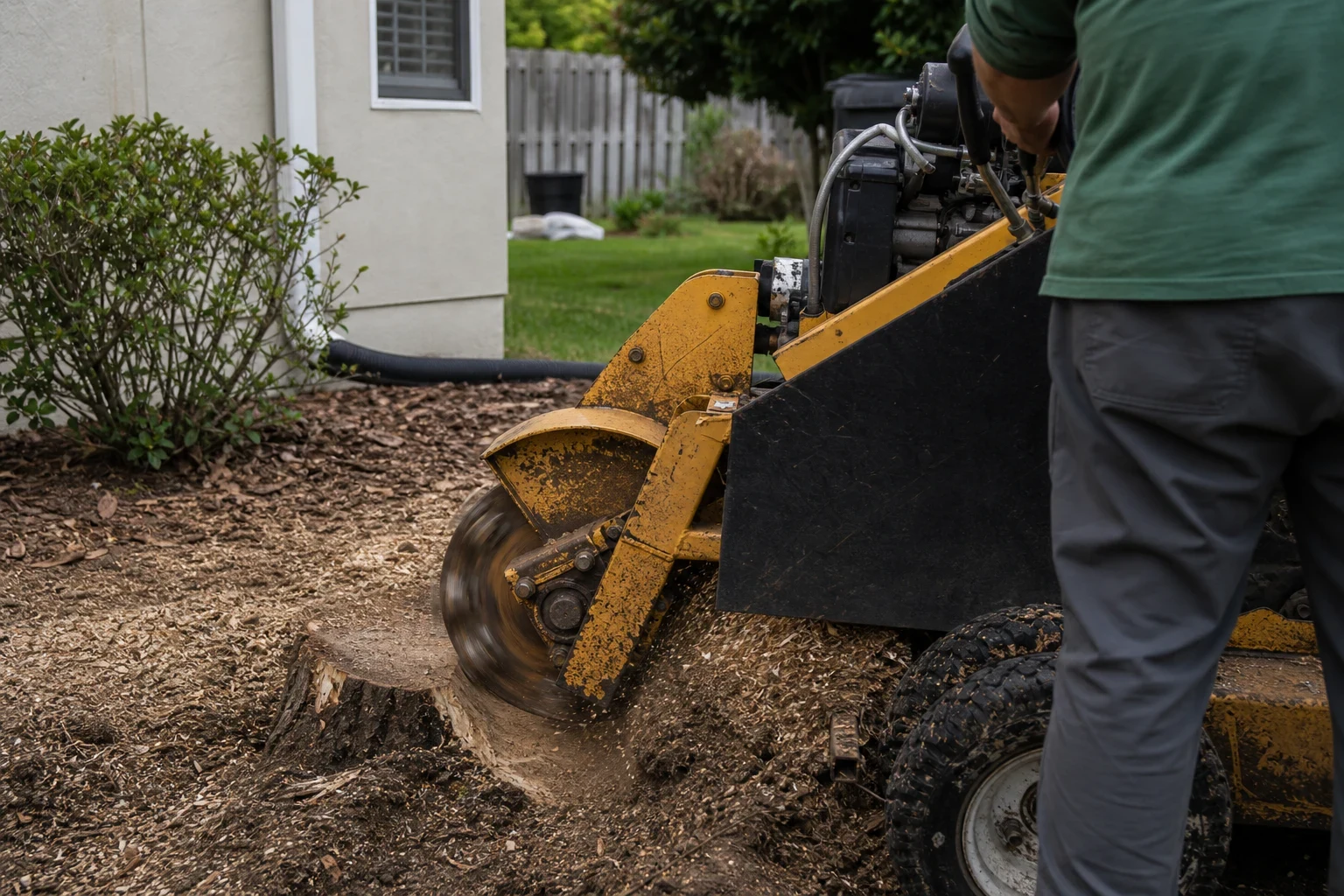
Stump grinding takes a cutting wheel to the stump and chews it into chips, down below the soil line. The roots stay in the ground and rot away slowly. For most yards, that's all you need. It costs less than digging the whole root ball out and does far less damage to the lawn around it.
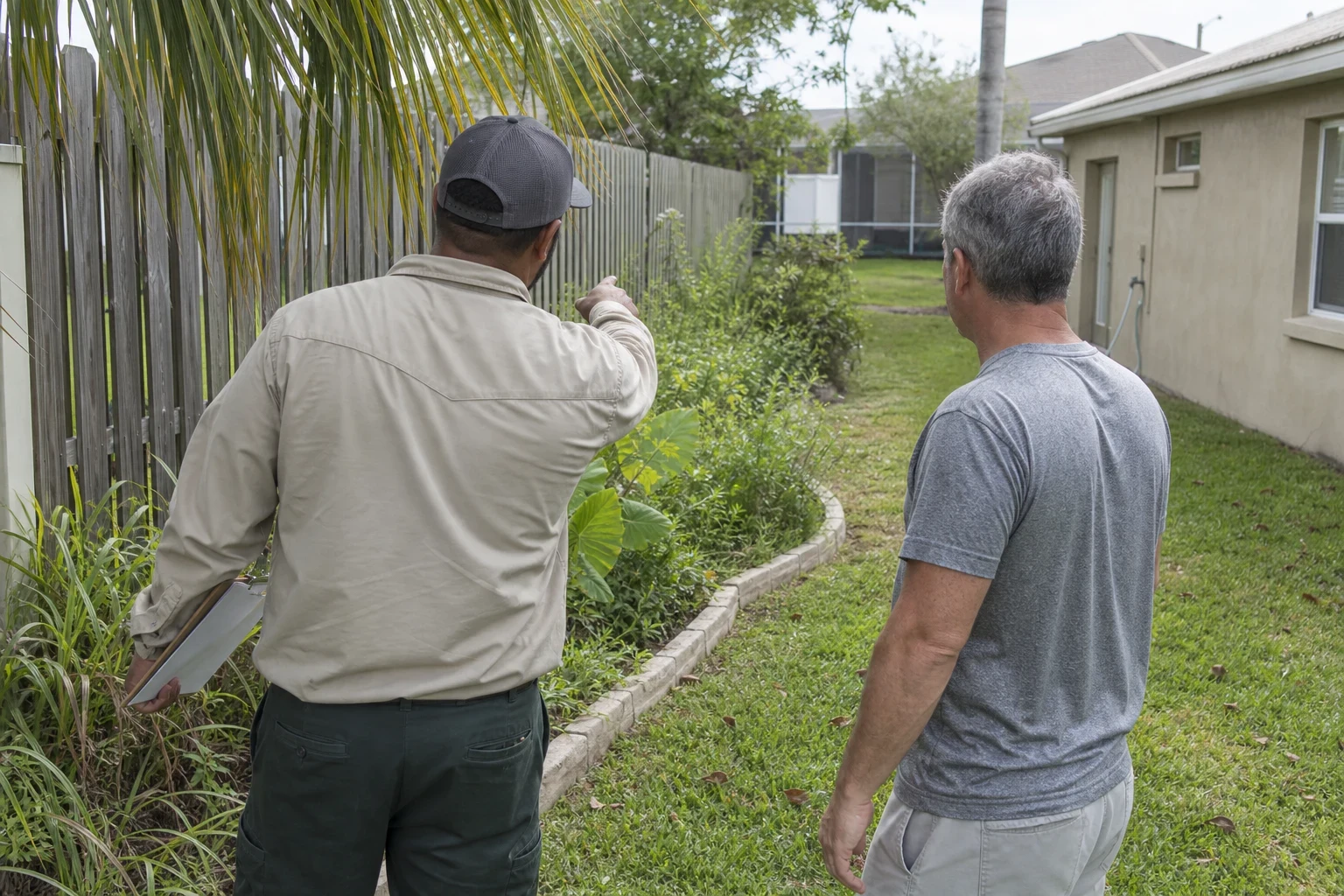
Before we quote anything, we walk out to the stump with you. We check the wood, how far the surface roots run, and what's close by. That means a fence, a driveway edge, sprinkler lines or the side of your home. Then we tell you plainly how deep we'd grind and what the spot will look like after. If a stump is small and tucked in a corner where it bothers nobody, we'll say so.
What the Job Includes
A look at the stump first
We measure it, check for rot or hollow spots, and note any roots running toward hardscape or beds. You hear what we found before we start.
Utility locate
We make sure underground lines are marked before the grinder goes in. In Florida that's done through Sunshine 811, and it takes a couple of business days.
Grinding below grade
We grind the stump several inches under the soil, deeper if you plan to lay sod or plant there. Large surface roots get ground out along with it.
Your choice on the chips
Grindings can go back in the hole, get spread as mulch in a back corner, or be hauled off. If you want new grass on top, we remove them and fill with soil.
Cleanup
Chips fly. We rake the lawn, blow off walks and the driveway, and leave the work area tidy.
Signs It's Time to Grind That Stump
- Mower keeps hitting it
- A low stump or the roots around it chip blades and leave a ragged patch you can't mow cleanly.
- Sprouts coming back
- Some trees push up new shoots from the stump and roots for years. Cutting them back each month gets old fast.
- Termites or ants moving in
- A rotting stump is food and shelter for termites and carpenter ants. Getting it out removes something they like to settle into near your home.
- Leftover from a storm
- After a tree comes down, the stump is often what's left. Our Tree Trimming and Removal crew can take the trunk and we can grind the stump on the same visit or later.
- You want to use that space
- Planning a patio, new beds or fresh sod. The stump has to go first.
How the Day Goes
- 1
Walk and estimate
We look at the stump with you, explain how deep we'd go and what happens with the chips, and give you a written estimate. It's free.
- 2
Lines marked
We get underground utilities located and check where your irrigation runs. If a sprinkler line sits right by the stump, we tell you before we cut, not after.
- 3
Grinding
We set the machine on boards if the lawn is soft and protect nearby windows or cars with shields. Most single stumps take well under an hour once we're set up.
- 4
Chips and fill
We handle the grindings the way you picked, then fill and level the hole so it's not a trip hazard.
- 5
Final walk
We walk the spot with you again so you can see it's below grade and the yard is cleaned up.
What Moves the Price
No two stumps cost the same. We price after we've seen the stump, and the estimate spells out what's included so there's no surprise later. When stump work is one piece of a larger yard project, you can spread the cost out: we offer financing up to $100,000 on 2–12-year terms, with no prepayment penalties.
- Size of the stump
- Diameter at ground level matters most. A wide old oak takes much longer than a young pine.
- Wood and roots
- Hard, dense wood and big flared roots slow the wheel down. Palm stumps are fibrous and usually grind faster.
- Getting the machine there
- A stump behind a narrow gate, on a slope or next to a pool deck needs a smaller grinder and more care.
- How deep and what happens to chips
- Grinding deeper for sod or planting, and hauling chips off instead of leaving them, both add time.
- How many stumps
- Several stumps in one visit cost less each than one-off trips.
Stump Grinding Questions
- How deep do you grind?
- Usually several inches below the soil line, which is enough for grass to grow over. Replanting on that exact spot takes more room, so for a new tree or shrub we cut deeper and clear out more of the old root area. We'll tell you at the walkthrough what makes sense for your plans.
- Will the roots keep growing?
- Most roots die once the stump is gone and break down over a few years. A few kinds of trees can send up sprouts from leftover roots. If yours is one of them, we'll say so and grind the larger surface roots too.
- Can I lay sod right where the stump was?
- Yes, once the chips are pulled out and the hole is filled with soil and packed. Chips left in the ground settle and rob nitrogen as they rot, so grass over them often yellows. Our Sod Installation crew can patch the spot.
- Is the machine going to rut my yard or hit a sprinkler line?
- Wet or sandy ground can show wheel tracks, so we put boards down to spread the weight. Before any cutting, we find out where your irrigation runs. If a line passes through the roots, we stop and talk it over with you, and our Irrigation service can reroute or fix it.
- Do you grind palm stumps?
- Yes. Palm stumps are different from hardwood ones, with a mass of thin roots instead of a few big ones, and they usually grind out quickly. If the palm is still standing, our Palm Tree Pruning and Removal page covers taking it down.
Let's Take a Look at That Stump
We'll come out, look at the stump and what's around it, and tell you straight what it will take. Then you decide.